


A persistent ache in your jaw, a clicking sound when you open your mouth, or a headache that seems to start right near your ear can make even simple daily tasks feel exhausting. These symptoms often point to a problem with the temporomandibular joint, the small but powerful hinge that connects your lower jaw to your skull. When this joint or the surrounding muscles become irritated, strained, or misaligned, the discomfort can radiate throughout your head, neck, and face.
At New Day Dental Medical Aesthetics, our team provides comprehensive TMJ and TMD treatment for patients throughout Cary, NC, and the surrounding area. Led by award-winning dentist Dr. Jordan Tucker, DDS, we combine advanced diagnostic technology with a patient-first approach to help you find lasting relief. As one of your trusted general dentistry providers in the area, we are committed to finding the root cause of your jaw pain and building a treatment plan that fits your life.
Understanding TMJ and TMD
The temporomandibular joint sits on each side of your face, just in front of your ears. It works with muscles, ligaments, and a small disc to allow your jaw to move smoothly when you chew, speak, and yawn. Temporomandibular disorders, commonly called TMD, refer to a group of conditions that affect this joint and the structures around it. While many people use TMJ and TMD interchangeably, TMJ refers to the joint itself, while TMD refers to the dysfunction or disorder.
TMD can develop for many reasons. Teeth grinding, jaw clenching, arthritis, a facial injury, or even prolonged stress can all place excess pressure on the joint and lead to inflammation or damage. According to the National Institute of Dental and Craniofacial Research, TMD affects about 5% of adults in the U.S. and is at least twice as common in women as in men. Early evaluation is one of the most effective ways to keep the problem from getting worse over time.
Recognizing the Symptoms of TMD
TMD symptoms can vary a lot from person to person, which is one of the reasons this condition is so often overlooked. Some patients experience only mild discomfort, while others deal with pain that limits their ability to eat, sleep, or focus throughout the day.
Jaw Pain and Tenderness
The most recognizable symptom is pain or soreness in the jaw, especially around the joint. This discomfort may feel worse in the morning if you grind or clench your teeth at night, or it may build up throughout the day after repeated chewing and talking.
Clicking, Popping, or Locking
Many patients notice an audible click or pop when they open or close their mouths. In more advanced cases, the jaw may temporarily lock in an open or closed position, making it hard to move normally. These sounds often mean the disc inside the joint has shifted out of proper alignment.
Headaches, Earaches, and Neck Pain
Because the temporomandibular joint sits so close to the ear and connects to muscles that run through the head and neck, TMD can trigger frequent headaches, ringing in the ears, and stiffness in the neck and shoulders. Patients often mistake these symptoms for unrelated conditions, which delays proper treatment.
Treatment Options for TMJ and TMD in Cary
Our approach to treating TMD starts with a thorough evaluation. We use 3D imaging technology to get a clear, detailed look at the joint, surrounding bone, and soft tissue. This lets us pinpoint exactly where the problem is occurring and determine the most effective path forward.
Custom Bite Guards
For many patients, a custom-fitted bite guard is one of the most effective first steps in TMD treatment. Worn during sleep, a bite guard positions the jaw in a more relaxed alignment and prevents the grinding and clenching that put stress on the joint. Unlike over-the-counter options, a professionally made bite guard is designed to fit your mouth precisely, offering better comfort and more consistent results.
Therapeutic Botox for TMD
In cases where muscle tension plays a big role in your symptoms, therapeutic Botox injections can help relax the overactive muscles that contribute to jaw pain and clenching. This treatment reduces muscle contractions around the joint and can bring noticeable relief for patients who have not responded to other conservative options. Dr. Jordan Tucker and Dr. McKenzie Tucker, MD, bring combined dental and medical knowledge to this approach, ensuring safe and precise care for each patient.
Lifestyle Adjustments and Supportive Care
Alongside clinical treatment, simple changes to your daily routine can make a real difference. Eating softer foods during flare-ups, practicing stress-reduction techniques, avoiding extreme jaw movements, and applying warm compresses to the joint area can all support your recovery. The following practical steps can help you manage symptoms between visits:
- Softer diet: Choose foods that require less chewing to reduce strain on the joint during flare-ups.
- Warm compresses: Apply heat to the jaw area for 10 to 15 minutes to ease muscle tension and soreness.
- Stress management: Techniques like deep breathing or light stretching can reduce jaw clenching tied to daily stress.
- Mindful jaw habits: Try to avoid resting your chin on your hand, chewing gum excessively, or opening your mouth too wide.
Our team walks you through these recommendations during your visit so you feel confident handling your symptoms at home.
Meet Dr. Jordan Tucker
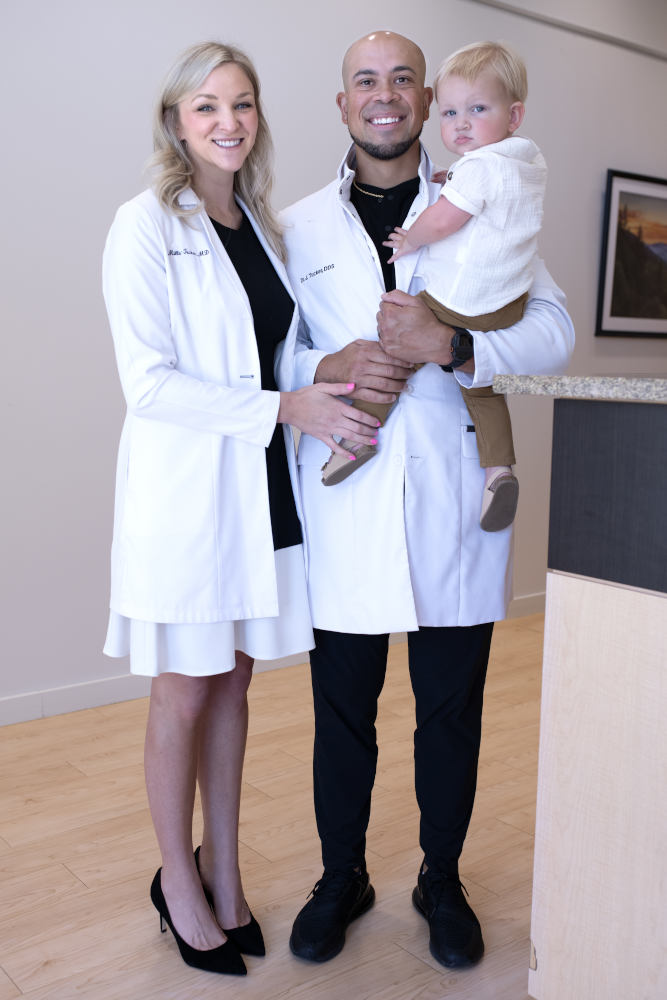
Dr. Jordan Tucker, DDS
Dr. Tucker earned his dental degree from West Virginia University and has built a Cary dental practice centered on making dental care approachable for patients at every stage of life. He is an award-winning dentist recognized among top dental professionals in the United States, and he evaluates TMJ and TMD symptoms to identify conservative treatment options, including custom-fit guards designed to ease jaw discomfort and protect your teeth. Dr. Tucker and our team take time to listen to your symptoms and build a treatment approach suited to your specific case.
Meet Our TeamFind Relief at New Day Dental Medical Aesthetics
Living with jaw pain, headaches, or a locked jaw does not have to be your norm. Dr. Jordan Tucker and our team bring the training, technology, and genuine care needed to help patients across Cary find real answers for TMJ and TMD discomfort. Recognized as one of the top three most technologically advanced dental practices in the United States, our office is equipped to diagnose and treat even complex cases with confidence.
Whether your symptoms are just starting or you have been dealing with jaw pain for years, we are ready to help you take the next step. Contact our office today to schedule your evaluation and get started on your path to relief.