
Mon–Thu 8AM–5PM | Fri 8AM–2PM
Home / General Dentistry / Wisdom Teeth Removal
Wisdom teeth do not always need to come out. At New Day Dental & Medical Aesthetics, we use imaging and a careful exam to see how your third molars are developing, then explain whether to watch them or remove them.
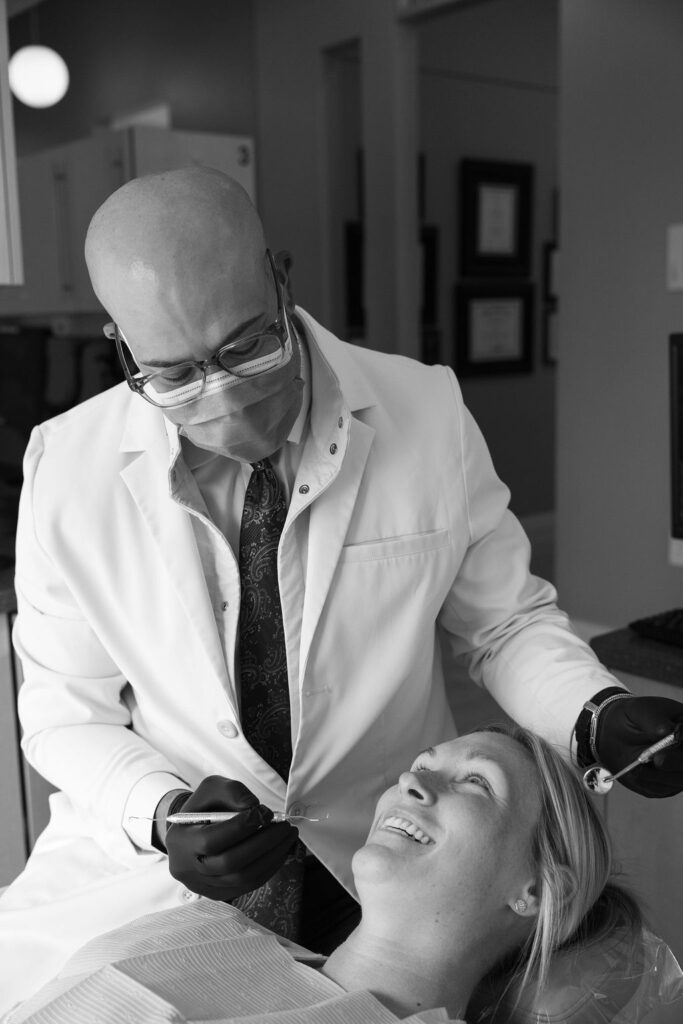
3D imaging
CBCT scans show tooth position and roots
In-office
Evaluation and removal in our Cary office
In-network
with Delta Dental and Blue Cross Blue Shield
Saturdays
Open select Saturdays for busy schedules
Third molars
Wisdom teeth, or third molars, are the last teeth to come in, usually in the late teens or early twenties. When there is enough space and they arrive in a good position, they can be healthy, working teeth. Often, though, the jaw is too small. A wisdom tooth can stay trapped under the gum or in the bone, come in at an angle, or only partly break through.
That is when problems start. A partly erupted tooth leaves a gap where food and bacteria collect, which can lead to swollen, painful gums and infection. A tooth that is hard to clean can decay, and one that pushes against its neighbor can damage the second molar. Wisdom teeth care is part of our general dentistry care, so Dr. Jordan Tucker can track your third molars at regular checkups and recommend removal only when it makes sense for you.
Why remove them
Every mouth is different, and some wisdom teeth can stay. Removal is usually recommended when there are signs of changes like these.
The tooth is trapped in the jaw or under the gum because there is not enough room for it to come in.
Trapped or angled teeth
A partly erupted tooth can let bacteria under the gum, causing pain, swelling, and stiffness in the jaw.
Pain and swelling
Wisdom teeth are hard to reach with a brush and floss, and decay in them is not always worth restoring.
Hard-to-clean teeth
A wisdom tooth pushing against its neighbor can lead to decay or damage on the tooth in front of it.
Protects nearby teeth
An impacted tooth can form a cyst that may damage nearby roots or the bone that supports your teeth.
Found on imaging
Healthy wisdom teeth that are not causing problems can often stay, with regular checks to make sure that does not change.
Monitored at exams
Not sure whether your wisdom teeth need to come out? An exam with imaging will give you a clear answer. Book a wisdom teeth exam
How it works
Knowing what to expect makes the process much less stressful. Here is how a typical case moves from the first exam to recovery.
We check your gums and bite and take digital X-rays, plus 3D imaging when needed, to see each tooth’s position, angle, and roots.
Dr. Tucker explains whether each tooth should be removed or watched, what the visit will involve, and what recovery looks like.
The area is numbed first. A fully erupted tooth is loosened and lifted out. An impacted tooth may need a small opening in the gum and may be removed in sections.
You go home with written aftercare instructions, and we check on healing and answer questions in the days that follow.
Keeping your wisdom teeth
Wisdom teeth that stay in place should keep being checked, because problems can still develop later. Before any decision, your dentist should examine your mouth and take an X-ray, according to the American Dental Association. Flossing around the back molars and keeping up with regular visits helps.
Why New Day Dental
Wisdom teeth decisions should be based on what the imaging shows, not a one-size-fits-all rule. Here is how we approach them.
Dr. Tucker is trained in CBCT cone beam imaging, which maps the position of each wisdom tooth and its roots before treatment is planned.
If your wisdom teeth are healthy and easy to clean, we may recommend watching them rather than removing them.
Your exam, imaging, removal, and follow-up visits happen at our Cary office, with select Saturday hours for busy schedules.
Is it time?
The answer depends on position, symptoms, and your overall oral health. These are common signs pointing one way or the other.
Dr. Tucker will walk you through what the imaging shows and the pros and cons of each choice. If a tooth is not causing problems, we keep an eye on it at your routine exams.
Insurance & payment
The cost of wisdom teeth removal depends on how many teeth are involved and how they are positioned. Our team reviews your coverage and explains your out-of-pocket cost before treatment.
Many dental plans cover part of wisdom teeth removal. We accept most major PPO plans, are in-network with Delta Dental and Blue Cross Blue Shield, and verify your benefits for you.
No insurance? Our in-house plan covers preventive care and adds discounts on additional treatment for one flat annual fee. See the VIP Membership Plan
Financing options are available for larger treatment plans, so you can spread the cost of care over time. Ask our team about options.
Before you book
A little planning makes the day of treatment and the first few days of recovery go more smoothly.

CBCT
3D imaging trained
Your dentist
Owner & lead dentist
Dr. Tucker completed undergraduate studies as a scholarship student-athlete and went on to earn a dental degree from West Virginia University. Before leading New Day Dental & Medical Aesthetics, Dr. Tucker owned a private practice and served as clinical faculty, mentoring future dental professionals.
For wisdom teeth, Dr. Tucker starts with the imaging. Training in CBCT cone beam imaging gives a clear view of each tooth’s position and roots, so you can see what is going on and understand why a tooth should be watched or removed. You will get a plan, clear aftercare instructions, and a team that checks in while you heal. Read Dr. Tucker’s full bio
Patient reviews
FAQ
Do not see your question here? Call us and our team will help.
No. Wisdom teeth that come in fully, sit in a good position, and can be cleaned well may be able to stay. They should still be checked at regular visits, since problems can develop later.
An impacted wisdom tooth is trapped in the jaw or under the gum because there is not enough room for it to come in. Impacted teeth can stay hidden without symptoms, which is why X-rays are important.
The area is numbed before treatment begins, so you should feel pressure rather than pain. Dr. Tucker will talk with you about what to expect and how we keep you comfortable during the visit.
Swelling and soreness are usually greatest in the first two to three days. Many people feel close to normal within about a week. Cold compresses, soft foods, and rest help in the first few days.
Dry socket can happen when the blood clot in the extraction site is dislodged too early, leaving the area painful. Avoiding straws, smoking, and hard rinsing in the first days helps protect the clot. Call us if pain gets worse instead of better.
It is a type of extraction, but wisdom teeth are often angled or trapped, which can make removal more involved. For other teeth, see our page on tooth extractions.
Get started
Dr. Jordan Tucker and our team evaluate wisdom teeth with digital X-rays and 3D imaging and provide removal and follow-up care in our Cary office, with in-network coverage for Delta Dental and Blue Cross Blue Shield.
Call (919) 701-2922 or complete our contact form to schedule your visit. We welcome patients from Cary, Apex, Holly Springs, Morrisville, and across Wake County.
Visit us
1223 Parkside Main St.
Cary, NC 27519
Get directions →
Office hours
Related services
Plan your visit