
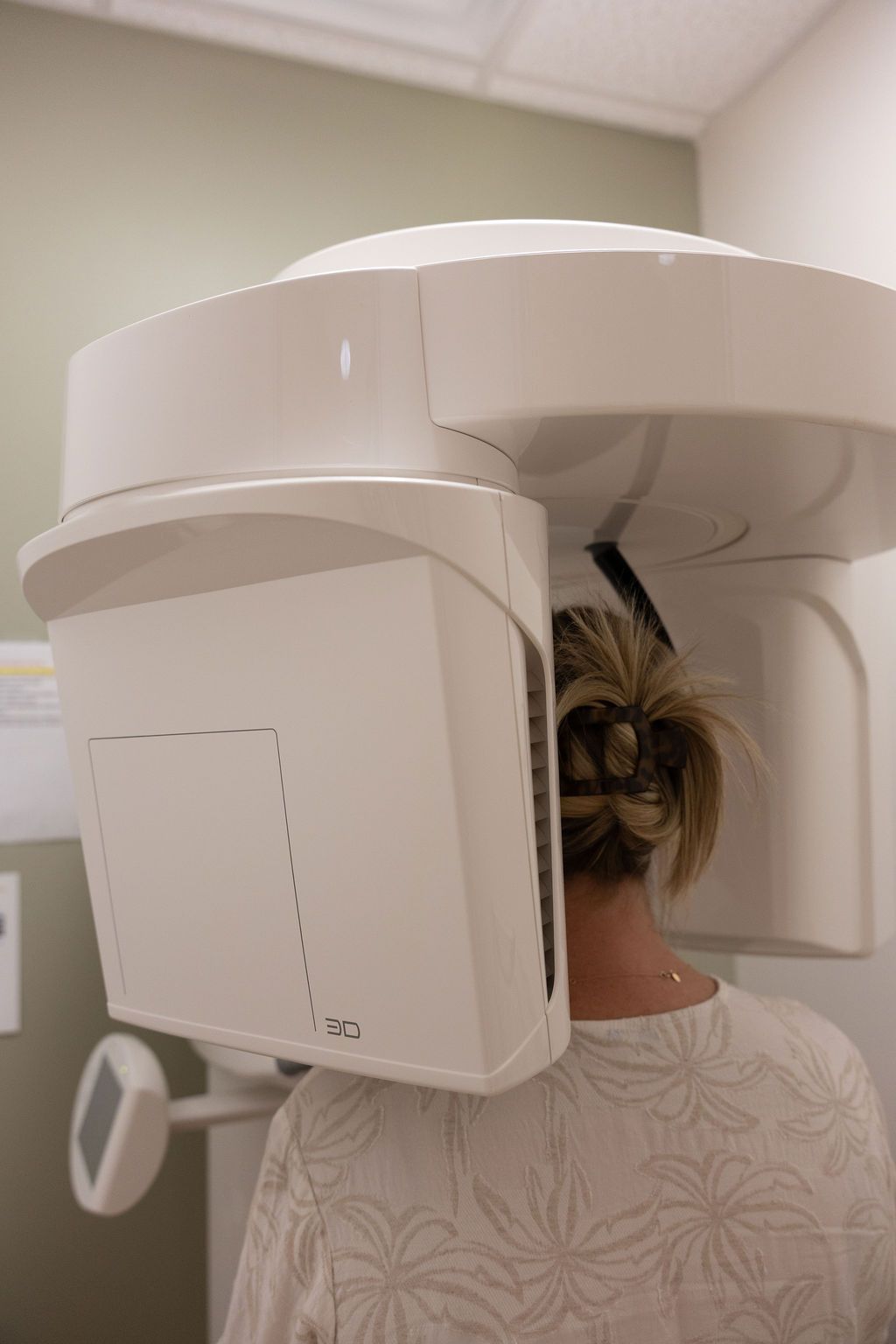

When something feels off with your teeth or jaw, getting clear answers as fast as possible makes all the difference. Traditional flat X-rays have done a solid job for decades, but they have real limits. Hidden fractures, developing infections, and complex root structures can go undetected when your dentist is working from a two-dimensional image, which can lead to delayed diagnoses and less predictable results.
At New Day Dental Medical Aesthetics, we bring a higher level of diagnostic clarity to every visit through CBCT 3D imaging. Ranked among the top three most technologically advanced dental practices in the United States, our office is equipped with cone beam computed tomography that gives award-winning Dr. Jordan Tucker, DDS, and our team a full, three-dimensional view of your teeth, bone, nerves, and surrounding tissues. As part of our general dentistry services, this technology helps us catch problems earlier, plan treatments more precisely, and move your care forward with confidence.
How CBCT 3D Imaging Works
Cone beam computed tomography, or CBCT, is a type of dental imaging that captures hundreds of images in a single rotation around your head. The scanner then compiles those images into a detailed, three-dimensional model of your entire oral and jaw structure. Unlike traditional dental X-rays, which can overlap and distort, CBCT eliminates these issues and provides you and your dentist with a much more complete picture.
A Quick and Comfortable Scan
The whole scan takes about 20 to 40 seconds. You simply stand or sit still while the scanner rotates quietly around you. There are no enclosed spaces, no loud noises, and no discomfort at all. The 3D image is ready almost immediately, so Dr. Tucker can review your anatomy right away and walk you through exactly what he sees.
Lower Radiation Than You Might Expect
One of the biggest advantages of CBCT over traditional medical CT scanners is the much lower radiation dose. According to the American Dental Association, CBCT imaging captures a full picture of dentition, soft tissues, nerve pathways, and facial bones all in one scan, while generally producing a radiation dose lower than other medical CT scans. The focused cone-shaped beam targets only the area of interest, keeping your overall exposure well within safe limits.
Why 3D Imaging Matters for Your Dental Care
Two-dimensional X-rays show shapes and shadows, but CBCT reveals depth, dimension, and detail that flat images simply cannot. This level of clarity directly affects how accurately Dr. Tucker can diagnose conditions and plan your treatment.
More Accurate Diagnoses
With 3D imaging, our team can identify hairline fractures in tooth roots, measure bone density before dental implant placement, detect infections hidden beneath the gumline, and evaluate the proximity of nerves before surgical procedures. Many of these details are invisible on standard X-rays, and missing them can lead to complications down the road.
Better Treatment Planning
Whether you need a root canal, a wisdom tooth extraction, or a more complex restorative procedure, CBCT imaging allows Dr. Tucker to map out every step before treatment even begins. Seeing the full anatomy in three dimensions means fewer surprises during procedures, less time in the chair, and better results overall.
Common Uses for CBCT in Dentistry
CBCT 3D imaging supports a wide range of dental treatments and evaluations. It’s not limited to one type of procedure, which is what makes it such a valuable part of a comprehensive practice like ours.
Some of the most common uses include:
- Dental implant planning: Evaluating bone volume and quality before implant placement to improve long-term success
- Impacted teeth: Locating impacted or unerupted teeth, including wisdom teeth that haven’t yet broken through
- TMJ concerns: Diagnosing joint abnormalities and bite issues that can cause discomfort or limited jaw movement
- Airway assessment: Reviewing airway anatomy for patients dealing with sleep-related concerns
- Orthodontic prep: Planning treatment and evaluating root positions before moving teeth
- Oral pathology: Identifying cysts, tumors, or other abnormalities in the jaw that need a closer look
Each of these situations benefits from the complete picture that only 3D imaging can provide. During your routine exam, Dr. Tucker may recommend a CBCT scan if any findings call for a closer look beyond what standard imaging can show.
Meet Dr. Jordan Tucker

Dr. Jordan Tucker, DDS
Dr. Tucker earned his dental degree from West Virginia University and has built a Cary dental practice centered on bringing advanced technology into everyday patient care. He is an award-winning dentist recognized among top dental professionals in the United States, and he uses 3D digital scanning and CBCT cone beam CT imaging across nearly every treatment at New Day Dental, from orthodontics to implants to routine exams. Dr. Tucker believes this technology leads to more precise, more comfortable, and more predictable outcomes for every patient.
Meet Our TeamSchedule Your Visit at New Day Dental Medical Aesthetics
Dr. Jordan Tucker, DDS, and our team believe that great dental care starts with great diagnostics. CBCT 3D imaging lets us see what other technologies may miss, translating directly into safer, more efficient, and more predictable treatment for you and your family. Our Cary, NC office serves patients from surrounding communities, including Apex, Morrisville, Holly Springs, and the greater Triangle area.
If you’re experiencing dental concerns or are simply due for a checkup, we’d love to welcome you to our office. Reach out today to schedule your appointment and experience the difference that advanced 3D imaging can make in your care.